Canada
 USA
USA Japan
Japan


How Big Is a Capsule House?

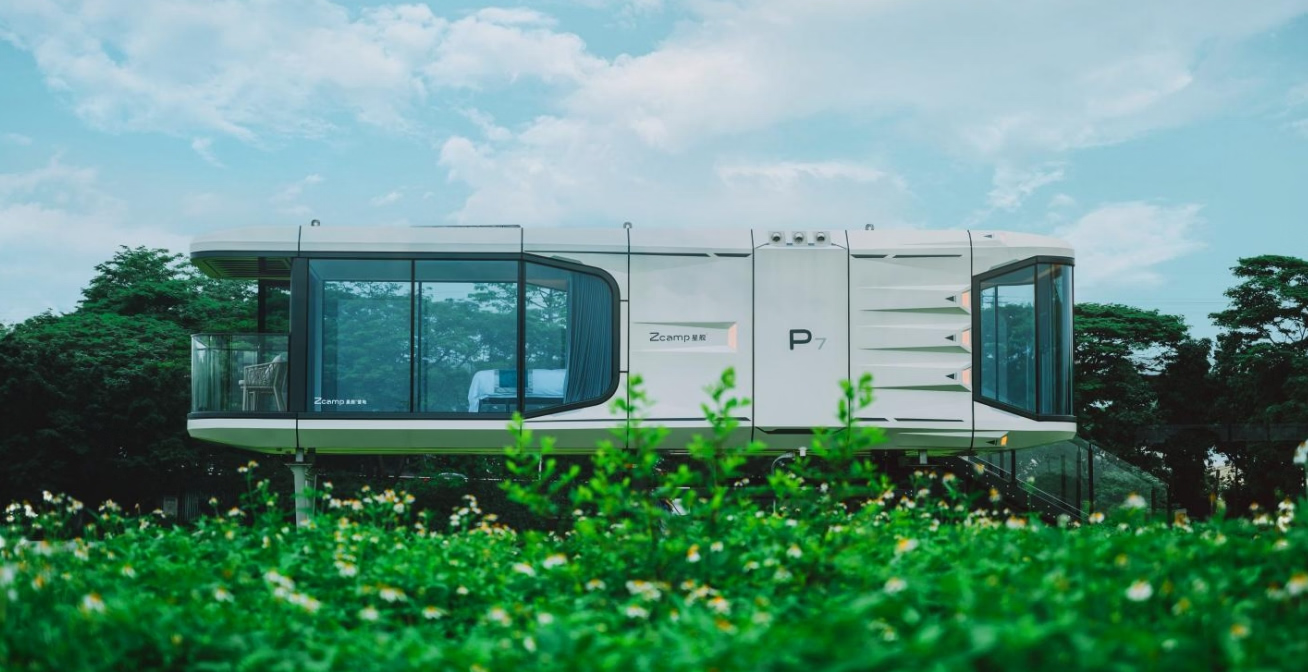
A capsule house is intentionally small—engineered to maximize function while minimizing footprint. But “how big” it is depends on its purpose, origin, and design. Here’s a clear breakdown:
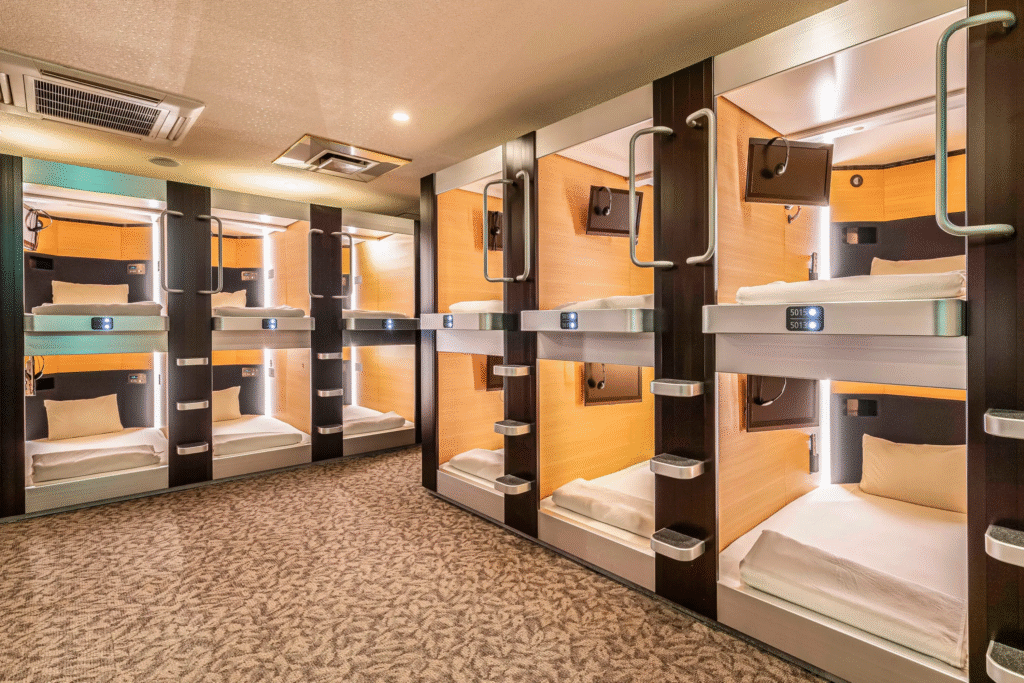
1. Japanese-Style Sleeping Pods (Smallest)
- Size: 2m x 1m x 1.2m (≈2 sqm / 20 sq ft)
- Use: Short-term rest in capsule hotels—just enough room for a bed, small shelf, and ventilation.
- Not for full-time living—purely for overnight stays.
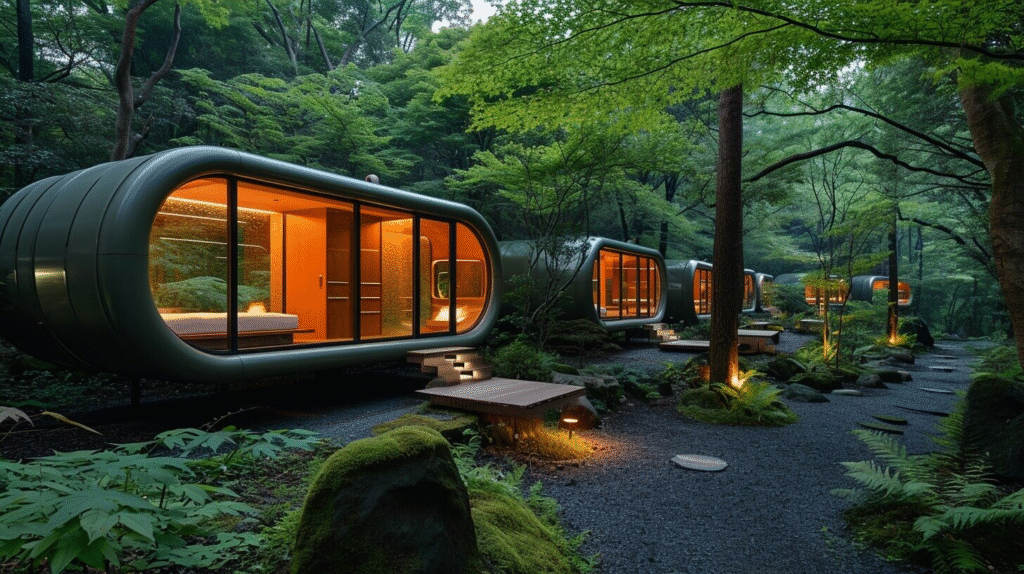
2. Backyard or Urban Micro-Units (Most Common)
- Size: 2m x 2m to 4m x 5m (4–20 sqm / 40–215 sq ft)
- Features:
- Sleeping area (often lofted)
- Compact desk or fold-down table
- Optional kitchenette or bathroom (in larger models)
- Used as: Home offices, guest rooms, student studios, or solo micro-homes.
- Popular in the Philippines, U.S., and Europe (e.g., Etong, Boxabl, Haven Pods).
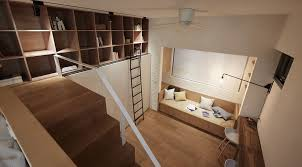
3. Full-Time Tiny Capsule Homes (Larger Micro-Living)
- Size: 20–40 sqm (215–430 sq ft)
- Features:
- Separate sleeping loft
- Full bathroom with shower
- Functional kitchen
- Smart storage and multi-use furniture
- Meets minimum habitable space standards in many countries for permanent residency.
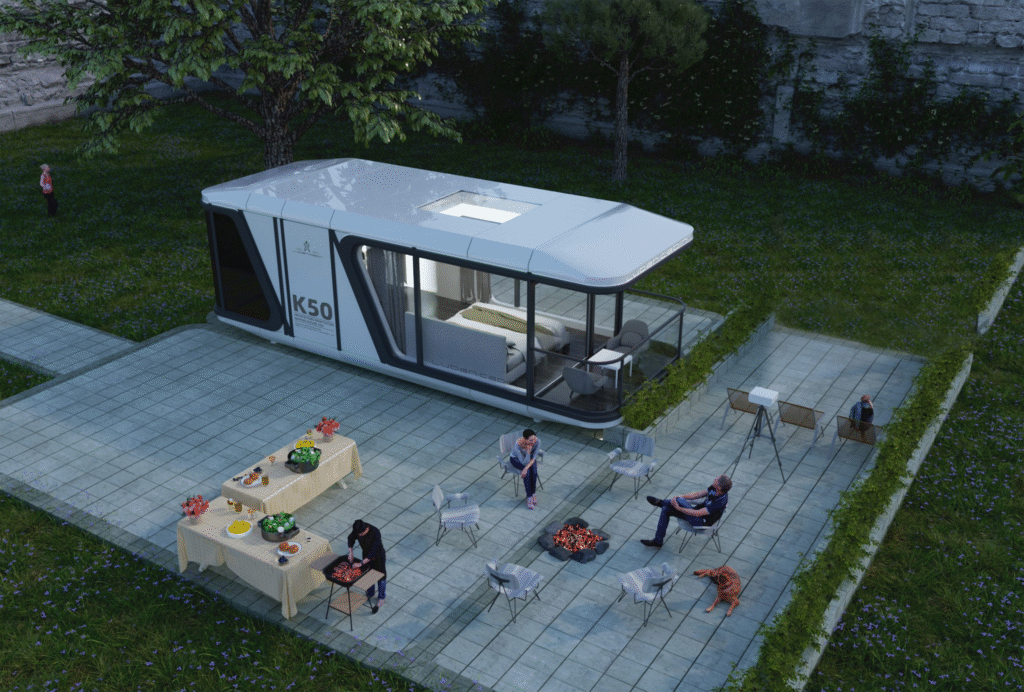
4. Modular or Expandable Designs
Some capsule homes use multiple pods connected side-by-side or stacked:
- Two 20 sqm units = 40 sqm (ideal for couples or small families)
- Companies like Volferda (Netherlands) or WELLCAMP (China) offer such configurations.
Key Dimensions to Know
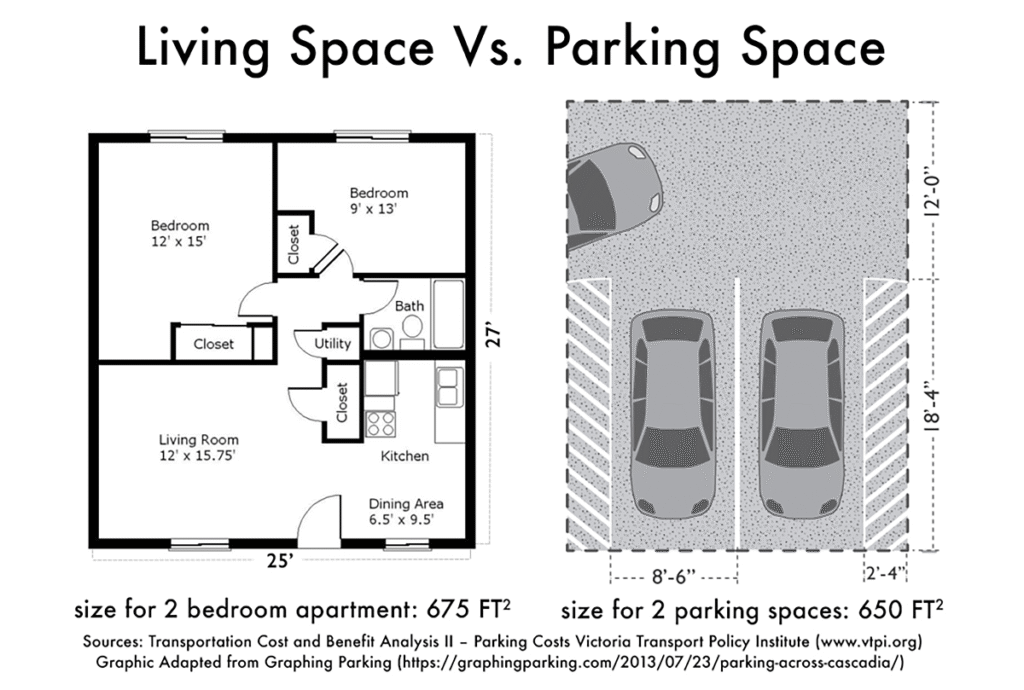
| Sleeping Pod | 2–4 sqm | 1.1–1.3m | 1 person (short-term) |
| Micro Studio | 6–12 sqm | 2.2–2.7m | 1 person |
| Full-Time Capsule | 15–40 sqm | 2.4–3.0m | 1–2 people |
FAQs
Q: Is a capsule house too small to live in comfortably?
A: Not if designed well! Smart layouts, vertical space, and multi-functional furniture make even 10–15 sqm livable for one person long-term.
Q: Can I add a bathroom inside?
A: Yes—in units 12 sqm and larger, a wet bath (toilet + shower combo) fits comfortably. Smaller pods often use outdoor or shared facilities.
Q: How does it compare to a tiny house on wheels?
A: Similar in size, but capsule homes often have boxier or rounded minimalist designs, factory-built panels, and focus more on urban or backyard use than mobility.